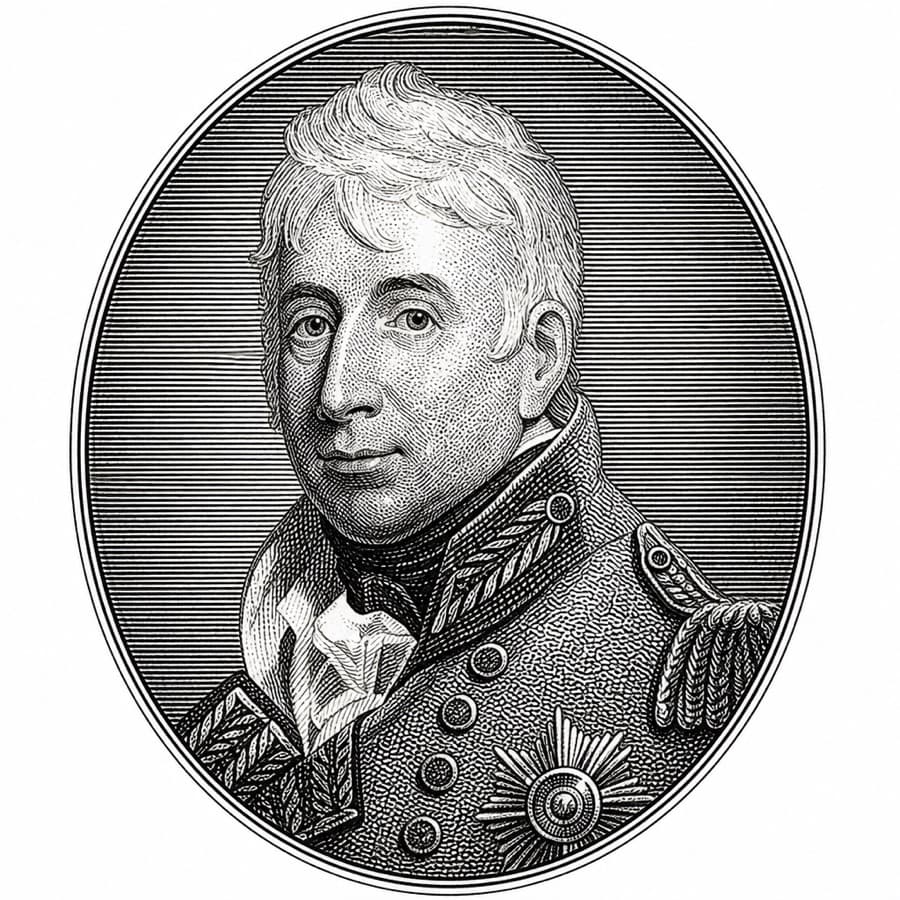
1726–1783
Eyre Coote
British Commander; Captor of Pondicherry
The Irish-born soldier who ended French military power in India in a single afternoon at Wandiwash — capturing Bussy, breaking Lally's army, and then conducting the five-month siege that brought Pondicherry down.
THE SIEGE
Eyre Coote was born in County Limerick in 1726 into an Anglo-Irish family, commissioned into the British Army, and was present at Clive's victory at Plassey in June 1757 — giving him experience of both European-style operations and Indian campaign conditions before he took his Carnatic command. He was a professional soldier of the highest competence: methodical, physically tireless, and possessed of the quality most useful in Indian warfare, which was the ability to hold a position and keep troops coherent across months of heat and attrition.
The Battle of Wandiwash on 22 January 1760 was the decisive engagement of the Third Carnatic War. Coote commanded the British force; Lally led the French. Coote used his cavalry to contain the French flanks while his infantry delivered the central blow. Charles de Bussy — recalled from Hyderabad against his own judgment by Lally — commanded the French cavalry and was captured during the engagement. The battle lasted one afternoon. When it ended, French offensive capacity in India was gone. Lally had no remaining force that could resist a British advance; his only option was to fall back to Pondicherry and wait for the siege.
Coote invested Pondicherry in August 1760. He advanced his trenches, established artillery positions, and maintained the naval blockade that cut the city off from any resupply by sea. The siege lasted five months. Pondicherry's fortifications were substantial, Lally's garrison was determined, and the civilian population trapped inside bore an increasing shortage of food. The city surrendered in January 1761. Coote permitted Lally to leave with the honours of war.
The subsequent order to demolish the city was a British command policy: Pondicherry's fortifications were systematically dismantled so that any restored French settlement could not again function as a military base. The demolition took weeks. Guillaume Le Gentil, arriving in Pondicherry seven years later to observe the transit of Venus, found a city still rebuilding from what the siege and the subsequent demolitions had done to it.
Coote returned to Britain, was knighted in 1771, and came back to India in his late fifties as Commander-in-Chief during the Second Anglo-Mysore War. In his sixties he won a series of battles against Hyder Ali's forces in the Carnatic, demonstrating that his military abilities had not diminished with age. He died at Madras in April 1783, still on campaign, aged fifty-seven. He had been present at the beginning and the middle of British India's rise: at Plassey, where Bengal's revenues changed hands; at Wandiwash, where French military power ended; and at the battles against Mysore, where the next phase of resistance was being fought. The East Indian Chronologist recorded the fall of Pondicherry simply as: "Pondicherry taken for the first time by Colonel Coote" — the phrase "for the first time" acknowledging that subsequent British occupations would follow, but that Coote's was the one that mattered.
The Pondy App
Take this guide with you
Offline maps, street-level history, restaurant picks, and hotel guides — everything on this site, in your pocket.