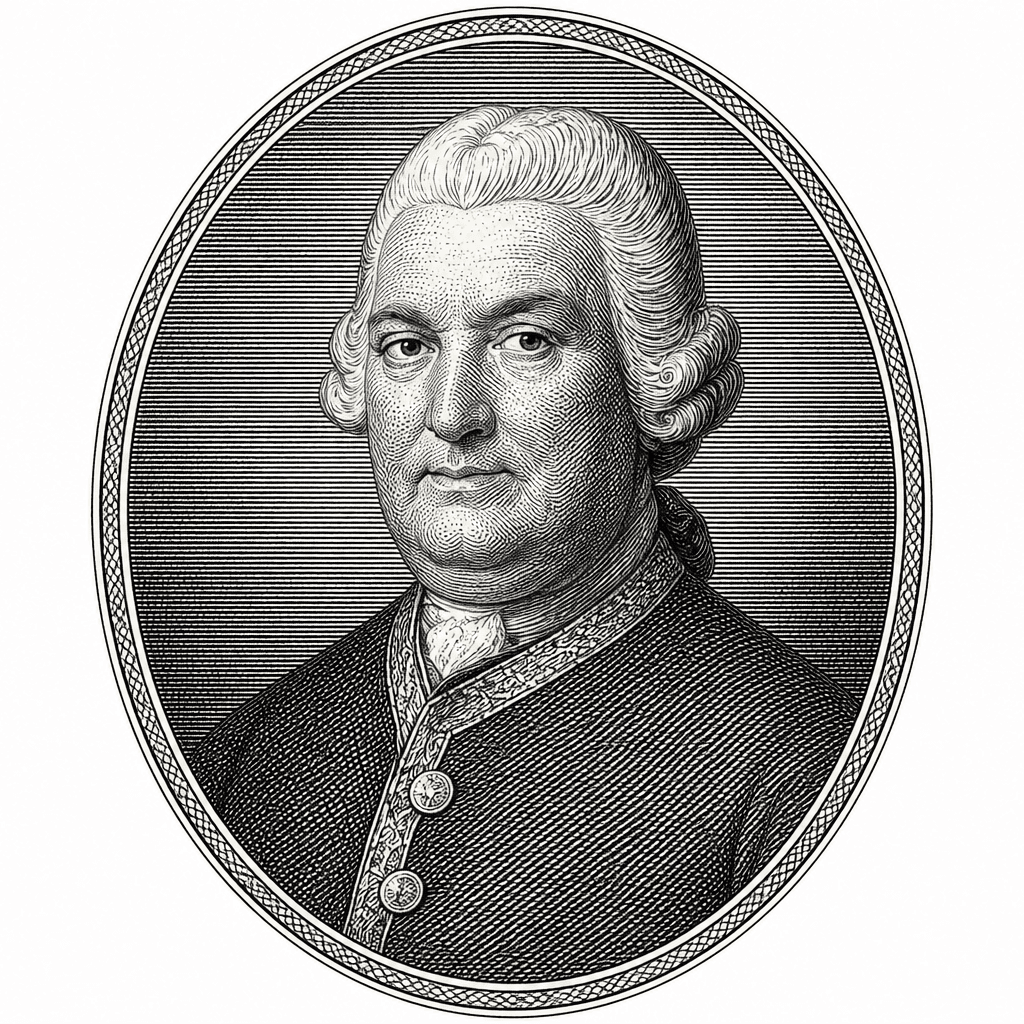
1697–1775
Stringer Lawrence
Father of the Indian Army
The British officer who built the sepoy army from scratch and mentored Robert Clive, whose institutional legacy outlasted every individual battle of the Carnatic Wars.
THE BUILDER OF ARMIES
Stringer Lawrence was born in Hereford in 1697 and came to Madras in 1748 as commander of the British East India Company's forces. What he found was a small, poorly organised body of soldiers with no consistent training or tactical doctrine. What he built, over the following decade and a half, was the sepoy system that would underpin British military power in India for nearly two centuries — a contribution measured not in individual engagements but in institutional durability.
His central achievement was systematic: he introduced regular training regimes for Indian soldiers, created stable officer structures for sepoy units, and began integrating Indian and European troops into coherent tactical formations capable of sustained campaigning. The French under Dupleix had been developing similar forces; the effectiveness of French-trained sepoys at the Battle of Adyar in 1746, where they defeated a much larger Indian army under Anwaruddin Khan, had demonstrated the military possibilities. Lawrence built the British version on more durable institutional foundations, in ways that survived the individual engagements of the Carnatic Wars and became the template for the Bengal and Madras Armies.
During the Second Carnatic War he worked alongside Clive — recognising the younger man's exceptional abilities and giving him the operational freedom that allowed Arcot and subsequent engagements. Lawrence himself was captured by French-allied forces at Arni in 1751, temporarily removing the British command from the field at a critical moment. His return to command stabilised the position.
He is less celebrated than Clive because his contribution was institutional rather than individual: he did not seize cities with two hundred men or win battles against overwhelming odds. He built the framework within which those who did such things could function. He retired to England in 1766 after nearly two decades in India. Thomas Gainsborough painted his portrait after his return — the one lasting visual record of a man whose military legacy was far larger than his fame. The Lawrence Asylum, a school for soldiers' children established in his name, was one of the first welfare institutions in British India.
The Pondy App
Take this guide with you
Offline maps, street-level history, restaurant picks, and hotel guides — everything on this site, in your pocket.