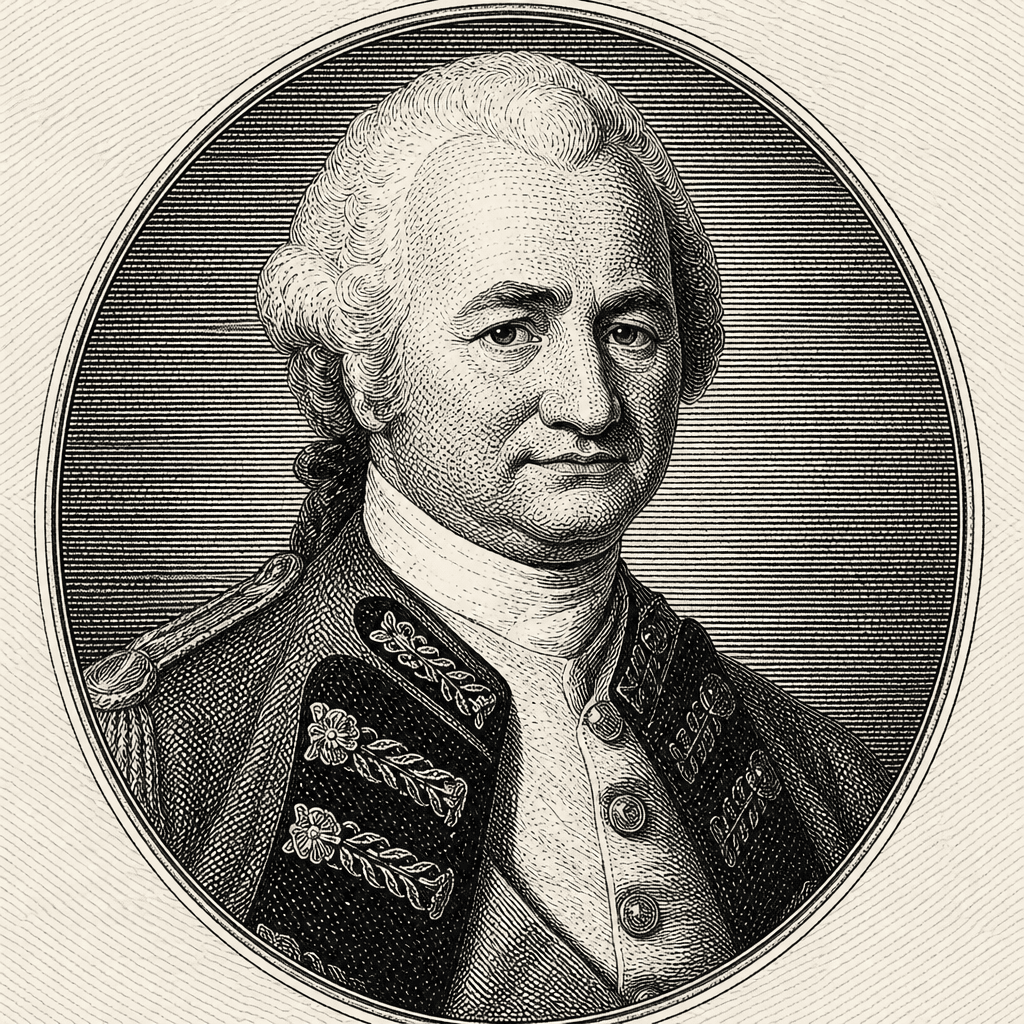
1725–1774
Robert Clive
British Military Commander; 1st Baron Clive
The Company clerk turned conqueror who dismantled Dupleix's empire at Arcot and Srirangam, then handed Britain the revenues of Bengal at Plassey — and ended his life as he had briefly considered beginning it, by his own hand.
CLIVE OF INDIA
Robert Clive arrived in Madras in 1744 as an undistinguished Company writer — the entry-level clerical grade — and was, by his own later account, acutely unhappy. At one point during his early Madras years, he raised a pistol to his head and pulled the trigger. The pistol misfired. He tried again. It misfired again. He concluded he was preserved for some purpose and put the gun down. He was twenty-one.
The French capture of Madras in September 1746 provided the purpose. He escaped French control and walked to the British settlement at Cuddalore. The experience of watching the French humiliate the British East India Company in front of the Indian rulers who had been watching the Franco-British contest with interest transformed him. He sought and obtained a military commission.
His seizure of Arcot in September 1751, with two hundred men, was the strategic pivot of the Second Carnatic War. By taking Arcot — the traditional seat of the Nawabs of the Carnatic — Clive forced Chanda Sahib to divert forces from the critical siege of Trichinopoly, where the British-backed Muhammad Ali was holding out. He then held Arcot for fifty days against a besieging force many times his size, repulsing a major assault on the night of Muharram, 14 November 1751. The moral effect was lasting: it demonstrated that British-commanded Indian troops could hold fortified positions against much larger French-allied forces. At Srirangam in June 1752, he encircled the French force under Law de Lauriston and compelled its capitulation on the same afternoon Chanda Sahib was beheaded. Dupleix's protectorate was over.
His decisive achievement came at Plassey on 23 June 1757, preceded by the seizure of the French settlement at Chandernagor on 23 March — eliminating France as a potential Bengal ally before addressing the Nawab. At Plassey he defeated the Nawab of Bengal with a force that had pre-negotiated the surrender of the Nawab's principal commanders. The revenues of Bengal passed to the British Company. From that moment, Britain could outspend France in India at any level of conflict France chose to sustain.
Clive ended his career in controversy, accused of corruption during his two Bengal governorships. A Parliamentary inquiry acquitted him but censured him. He died in London in November 1774, aged forty-nine. The pistol did not misfire twice this time.
The Pondy App
Take this guide with you
Offline maps, street-level history, restaurant picks, and hotel guides — everything on this site, in your pocket.