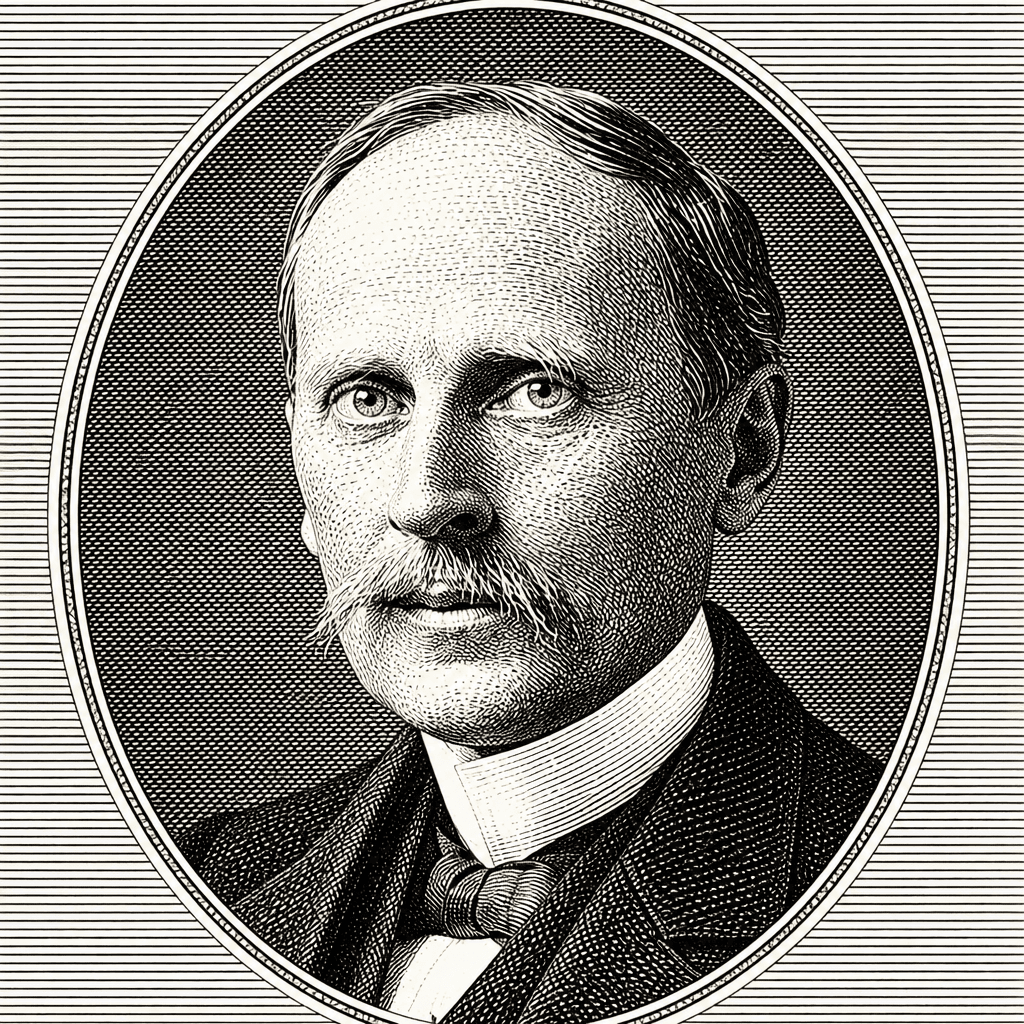
1866–1944
Romain Rolland
French Novelist; Nobel Prize 1915
The French Nobel laureate who never visited India but whose passionate engagement with Indian spiritual thought built the intellectual bridge between Pondicherry's ashram and European culture.
THE EUROPEAN WHO LISTENED TO INDIA
Romain Rolland was born in 1866 in Clamecy, Burgundy, educated at the École Normale Supérieure, and became, by the time of the First World War, one of the most celebrated French writers alive: novelist, playwright, musicologist, and committed pacifist. He was awarded the Nobel Prize for Literature in 1915, partly for his decade-long multi-volume novel Jean-Christophe and partly for his wartime pacifism — a position that cost him his French reputation almost as thoroughly as it won him the prize. He spent the war years in Switzerland, estranged from both sides, corresponding with anyone across Europe who would still listen.
His India connection came not through travel but through reading, correspondence, and an almost mystical sympathy with a tradition he encountered first through music and scripture. His biographies of Indian spiritual figures, published in the 1920s and 1930s, were transformative events in European intellectual life. Mahatma Gandhi (1924) introduced Gandhi to the French-speaking world. Prophets of the New India (1929), covering Ramakrishna and Vivekananda, went deeper than ordinary biography into a genuine engagement with Hindu thought and the possibility that Indian religious experience offered something Western philosophy had ceased to provide.
He then turned toward Pondicherry. He corresponded at length with both Sri Aurobindo and the Mother through the 1930s, his letters engaging seriously with the philosophy of Integral Yoga and the ambitions of the Ashram. The Mother valued his work as a cultural bridge between France and the Indian spiritual tradition; Sri Aurobindo engaged with his philosophical positions at length. The exchange was among the most sustained intellectual correspondences between a European writer and the Pondicherry Ashram in the pre-war decades.
He died in Vézelay in December 1944, having never visited India. A street in Pondicherry bears his name — an acknowledgement that the man who never came here did more than most who did to make the city's spiritual legacy visible to the European world.
The Pondy App
Take this guide with you
Offline maps, street-level history, restaurant picks, and hotel guides — everything on this site, in your pocket.