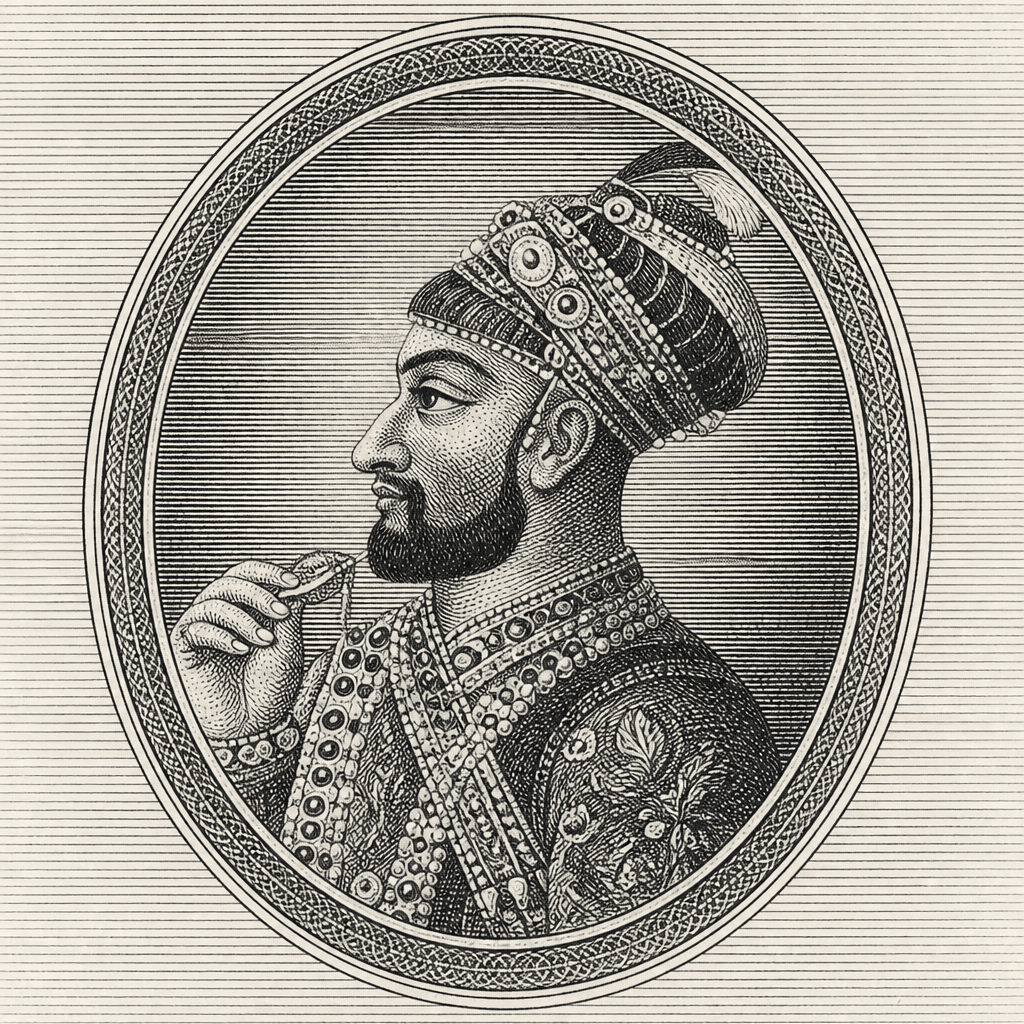
c. 1720–1782
Hyder Ali
De facto Ruler of Mysore
The self-made Sultan of Mysore who twice humiliated British forces in the field and became the cornerstone of every French strategic plan for India after Pondicherry fell.
THE TIGER BEFORE THE TIGER
Hyder Ali was born around 1720 near Kolar in Karnataka, the son of a rocket artillery commander in Mysorean service. He had no formal education, no inherited title, and no court connections. What he had was an extraordinary capacity for military observation. He watched the Carnatic Wars being fought along Mysore's eastern borders and grasped with clarity the lesson that Dupleix had discovered: that a small body of European-disciplined troops could defeat armies of vastly superior numbers. He resolved to build exactly such an army — and to attach it to exactly such a European patron.
By 1761, the year Pondicherry fell to the British, he had manoeuvred his way to effective control of Mysore, displacing the incumbent minister while leaving the Wodeyar kings as ceremonial sovereigns. His timing was precise: the dispersal of French soldiers from the fallen city gave him trained European military men to absorb. Around them he built an army of approximately 90,000 troops, 50,000 trained on European lines, with an iron-cased rocket corps of more than 1,000 men that no other Indian power could match.
France recognised his strategic value immediately. From 1771, a secret French military mission operated under his command at Seringapatam — officers, cavalrymen, and artillerymen who helped develop his forces in return for access to the most formidable Indian kingdom of the era. When the Second Anglo-Mysore War opened in 1780, he invaded the Carnatic at the head of 90,000 men and in September annihilated a British column under Colonel Baillie at the Battle of Pollilur, destroying it so completely that the defeat shocked British India into recognition that a genuinely dangerous adversary had emerged.
He died on 7 December 1782 of a lumbar abscess, at the moment of maximum French strategic engagement with Mysore. One of his last French officers, a captain named Bouthenot, wrote: "Ce grand homme avait de l'estime pour notre nation" — this great man held our nation in esteem. His son Tipu Sultan inherited the throne, the army, and the French alliance.
The Pondy App
Take this guide with you
Offline maps, street-level history, restaurant picks, and hotel guides — everything on this site, in your pocket.