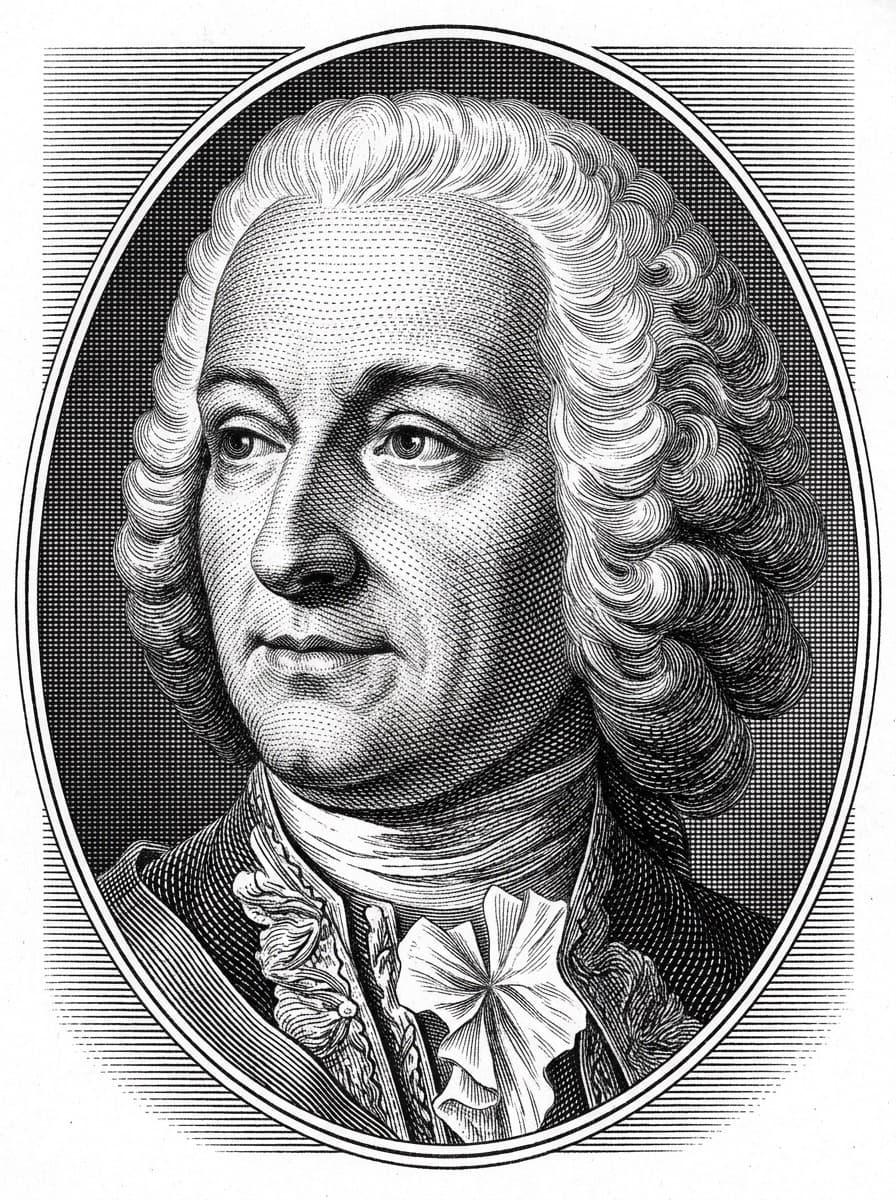
1697–1763
Joseph François Dupleix
Governor-General of French India
The man who dreamed of a French empire in India, built it piece by piece through alliances and sepoys, and lost it not to British arms but to a recall order from Paris.
THE ARCHITECT OF FRENCH INDIA
Joseph François Dupleix arrived in Pondicherry as Governor-General in 1742 already seasoned by two decades at Chandernagor, France's Bengal settlement. What he brought with him was a theory of empire unlike anything Europe had applied in India: that a small body of European-trained troops, reliably deployed in Indian succession disputes, could win France a protectorate over princes far more powerful than the French East India Company itself.
His method was audacious and, for a time, stunningly effective. When the Nizam of Hyderabad died in 1748 and succession crises opened simultaneously in Hyderabad and the Carnatic, he moved fast. He backed Chanda Sahib for the Nawabship of the Carnatic, placed a friendly Nizam at Hyderabad through his brilliant field commander Bussy, and at his peak claimed an indirect sovereignty over a territory larger than France itself. The mechanism was not European-style conquest but strategic patronage: French-trained sepoys at key courts as the silent collateral behind Indian thrones.
His own secretary, Ananda Ranga Pillai, watched the whole enterprise from the inside and described Dupleix in his private Tamil diary as "one of Nature's rare gardeners who can raise from nothing a tempest-blown forest" — a figure capable of building something vast from minimal materials, vulnerable only to the storms he could not control.
The experiment ended in 1754, not by British arms but by a decision in Paris. The French East India Company, alarmed by cost and fearful of open war, dispatched Godeheu to make peace. Dupleix was recalled in humiliation. He walked to his ship on 14 October 1754, boarded the Duc d'Orléans, and never returned. He then spent nine years in France fighting a legal battle over the personal fortune he claimed to have spent in the Company's service — 7,022,296 livres, by his own meticulous accounting — and died in 1763, the year the Treaty of Paris formalised France's surrender of territorial ambitions in India, his claim still unrecognised.
His statue stands on Goubert Avenue, arm raised toward the sea. Rue Dupleix runs through the heart of the White Town. The city he governed still carries his name on its oldest street, and the logic of his experiment — using local politics rather than direct conquest — would be reinvented, in very different form, by the British in the century that followed.
The Pondy App
Take this guide with you
Offline maps, street-level history, restaurant picks, and hotel guides — everything on this site, in your pocket.