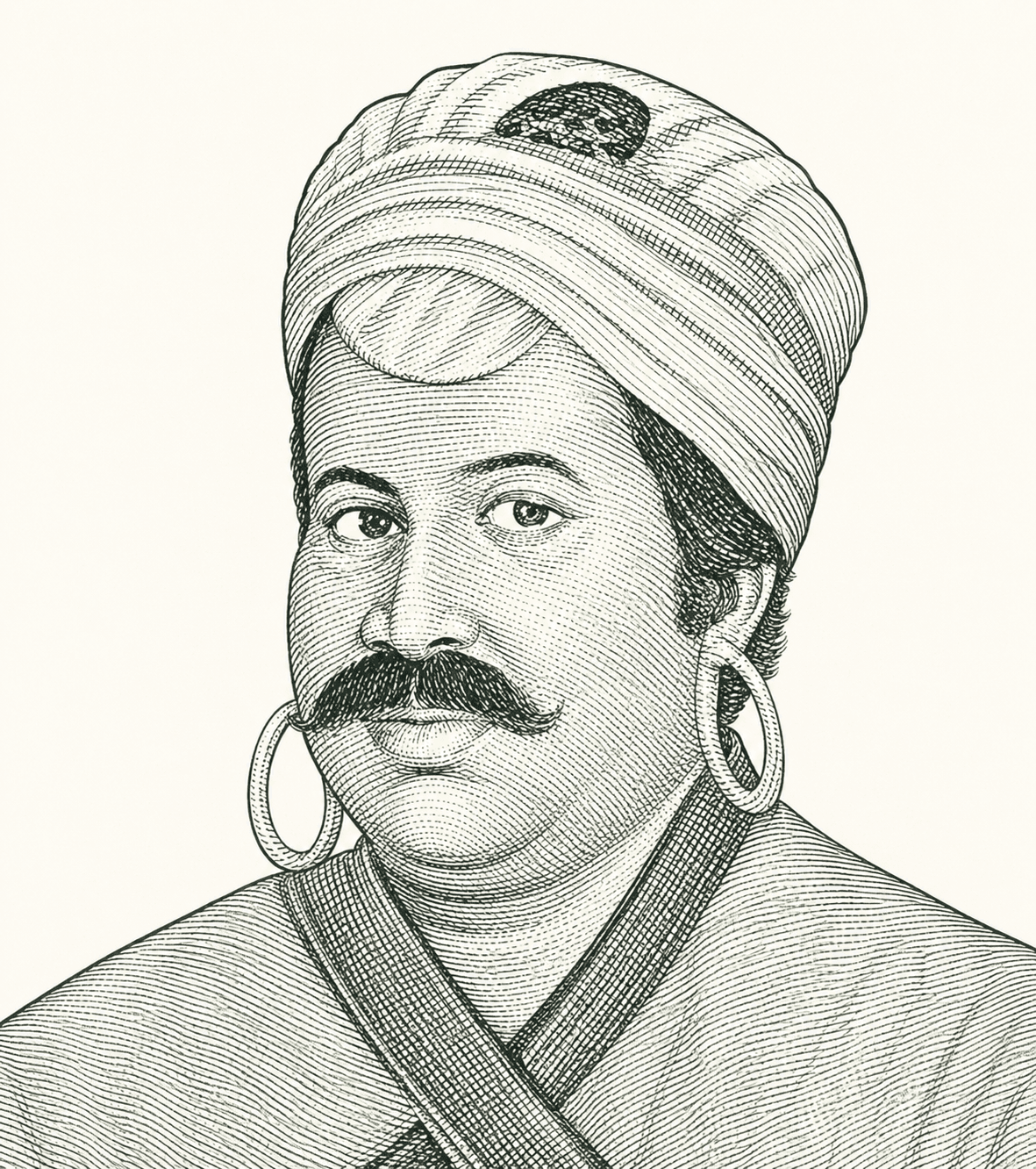
1709–1761
Ananda Ranga Pillai
Chief Interpreter to Dupleix; Diarist
Dupleix's chief broker and interpreter, whose private Tamil diary is the most intimate record of French India ever written — and the only one told from inside the room.
THE MAN WHO WROTE IT ALL DOWN
Ananda Ranga Pillai was born in Pondicherry in 1709 into the family of a dubash, the essential Indian intermediary who made European trade possible. The role combined translation, brokerage, credit extension, intelligence gathering, and social navigation into a single indispensable function. Pillai inherited the position and elevated it to something unprecedented: for twenty-five years, as dubash to Governor Dupleix, he kept a private diary in Tamil that recorded everything he witnessed and heard.
The diary runs to twelve published volumes. Nothing quite like it exists in the history of European colonialism in India. Because it was written for himself rather than for any European audience, Pillai recorded with unusual candour: the Governor's private moods and late-evening conversations; the quarrels among French officers; the movements of intelligence from across the Carnatic; and his own commercial affairs — the arrack distillery he managed, the loans he extended to French officers, the trading ventures he conducted behind the scenes. He was not merely an observer of French power but a beneficiary and participant, enriched by his connection to the Governor while remaining, in his social and cultural life, entirely part of Pondicherry's Tamil world.
His most vivid entries concern the dispute between Dupleix and La Bourdonnais over what to do with Madras after its capture in 1746. Pillai records Dupleix's private assessment of La Bourdonnais with unconcealed contempt — calling him "an utterly petty-minded man" who had thrown away the greatest French military achievement in India for a ransom payment. The quarrel, as Pillai recorded it, is one of the most intimate portraits of personal and strategic conflict in the literature of French India.
He died in 1761, the same year Pondicherry fell to the British and the world he had documented was swept away. His house, which he describes in the diary, survives today on Ranga Pillai Street, near the Grand Bazaar — the street itself named after him — one of the very few eighteenth-century buildings still standing in the city. His diary was not translated into English until the early twentieth century but has since been recognised as the indispensable Indian voice in a history otherwise told almost entirely by Europeans — the one account written from inside the room where French India's fate was being decided.
The Pondy App
Take this guide with you
Offline maps, street-level history, restaurant picks, and hotel guides — everything on this site, in your pocket.