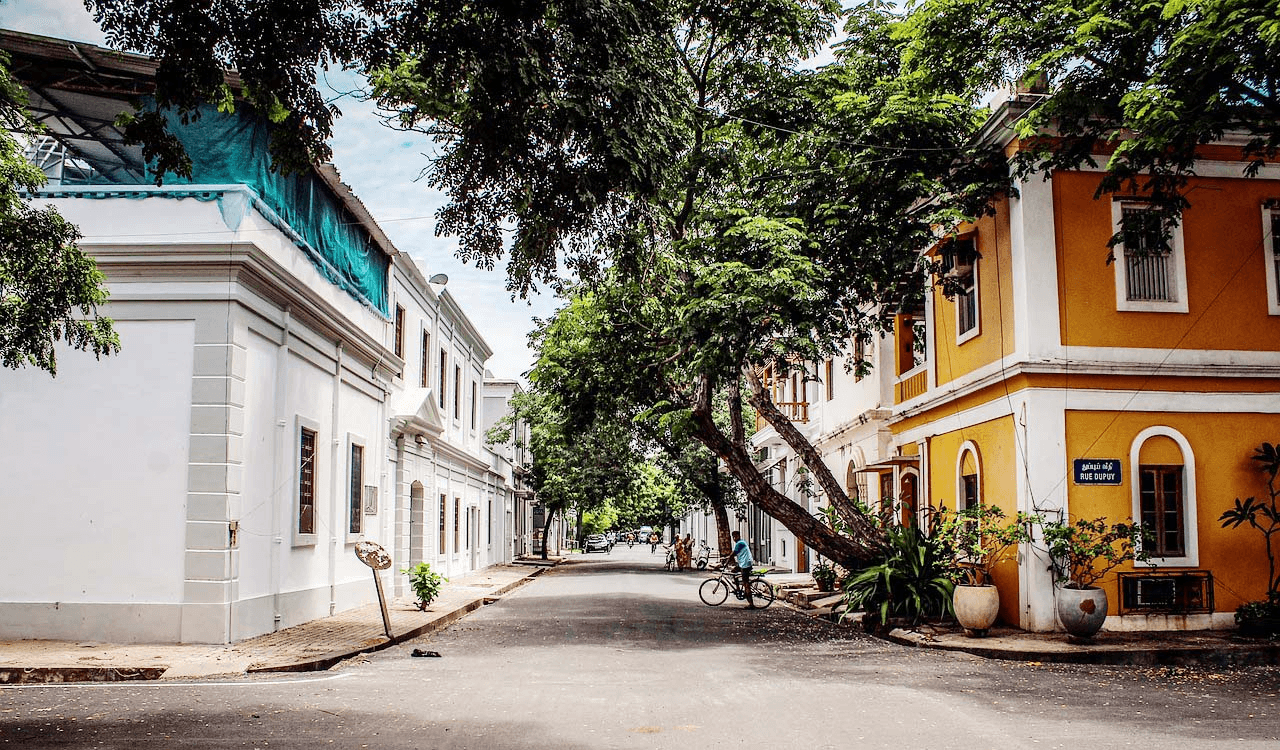
East–West Street
Bazar Saint Laurent Street
Also known as: Rue Bazar Saint-Laurent
Named after: Saint Lawrence (Saint Laurent, 225-258 AD), Christian martyr; 'Bazar' indicates this was a market street
Welcome to Bazar Saint Laurent Street, one of the most colourful streets in the White Town. 'Bazar' tells you what this street was: a market, the commercial layer of the colonial city running parallel to the grand commemorative axis of Rue Bussy just to the north. Saint Laurent was a deacon martyred in Rome in 258 AD. He was burned on a gridiron. His last words, reportedly, were: turn me over, I am done on this side.
Saint Lawrence (Saint Laurent in French, 225-258 AD) was a deacon of the early Christian church in Rome, executed during the persecution of the Emperor Valerian. The manner of his death, burned alive on a gridiron, made him one of the most venerated martyrs of the Western church and, according to legend, one of the most stoical: he reportedly told his executioners to turn him over because he was done on one side. He became the patron saint of cooks, among others.
In Pondicherry, his name was given to a bazar street: the market layer of the White Town grid, running parallel to Rue Bussy. The word bazar in the colonial city meant exactly what it means today: a commercial street, a place of trade, colour, and noise. While the grand E-W axes of the White Town carried the names of governors and admirals, the market streets carried the names of saints, a reminder that the Church and the Company built this city together and that French colonial urbanism wove Catholic devotion into the street grid as naturally as it wove military commemoration.
The Grand Bazaar was the commercial heart of old Pondicherry: Ananda Rangapillai's house faced it, and his diary records the gossip, prices, and anxieties of a market that connected the European quarter to the Tamil trading world west of the canal. Today Bazar Saint Laurent is one of the most visually rewarding streets in the White Town: the buildings are painted in the bright yellows, greens, and pinks that make this part of Pondicherry look like nowhere else in India. Worth a slow walk.
Notable on this street
- Saint Laurent was burned on a gridiron in Rome in 258 AD. He reportedly told his executioners to turn him over because he was done on one side. He is the patron saint of cooks.
- The word 'bazar' tells you what this street was: a market. Commerce, colour, and noise, running parallel to the grand military axis of Rue Bussy just to the north.
- The Grand Bazaar was the commercial heart of Pondicherry. Ananda Rangapillai's house faced it. His diary records the prices, gossip, and anxieties of a market that connected the White Town to the Tamil quarter.
- The buildings on this street are painted in bright yellows, greens, and pinks. One of the most colourful walks in the White Town.
- In a grid named mostly after soldiers and governors, Saint Laurent is a reminder that the Catholic Church was the other great institution of French India. Saints and admirals share the same map.
The Pondy App
Take this guide with you
Offline maps, street-level history, restaurant picks, and hotel guides — everything on this site, in your pocket.