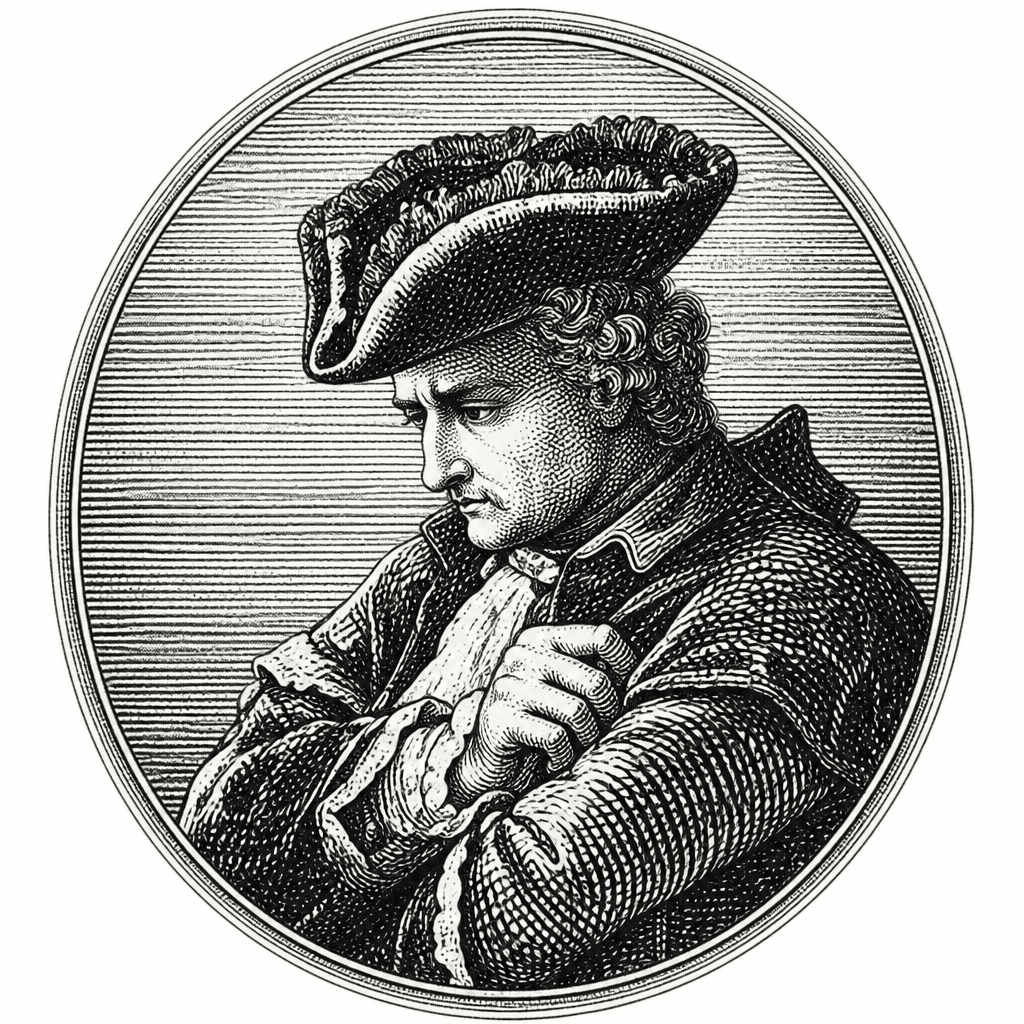
1702–1766
Thomas Arthur, Comte de Lally
Last French Commander of Pondicherry
The Irish-French general who arrived in 1758 to save French India and instead presided over its final collapse — then was executed in Paris for a defeat that was structurally inevitable.
THE LAST COMMANDER
Thomas Arthur, Comte de Lally, Baron de Tollendal, was born in 1702 into the Irish Catholic Jacobite diaspora that formed an important military constituency in the French army. His father had followed King James II into French exile after 1688. Lally himself rose to prominence in European warfare: at Fontenoy in 1745, leading the Irish Brigade's charge, he distinguished himself sufficiently to be remembered across the army. He was appointed in 1757 to reverse French decline in India, given the rank of lieutenant-general, authority over both the military and civil administration at Pondicherry, and expectations that the situation could be retrieved.
It could not. France's defeat at Plassey in June 1757 had transferred the revenues of Bengal to Britain — resources France could not match at any level of commitment. Lally compounded these structural disadvantages with serious errors of judgment: he alienated the French civilian establishment with contemptuous treatment of Company officials, and most fatally recalled Bussy from Hyderabad, destroying at a stroke the protectorate Bussy had spent eight years constructing. Those who understood what Bussy had built never forgave the decision.
The siege of Madras in December 1758 failed after two months. At Wandiwash on 22 January 1760, Eyre Coote defeated the last French field army in India and captured Bussy. Among those present during the subsequent British siege of Pondicherry was a young soldier in French service named Claude Martin — who would subsequently transfer to the British East India Company and begin the remarkable career that made him one of the most influential Europeans in eighteenth-century India. For Martin, the fall of Pondicherry was a beginning; for Lally, it was the end.
The city surrendered in January 1761 after a five-month siege that left the population in severe food shortage. Returning to France, Lally was arrested, tried for treason by the Paris Parlement, and executed by beheading on 9 May 1766. The charge was partly political scapegoating and partly the personal animosity he had accumulated in Pondicherry. Voltaire took up his cause in Fragments sur l'Inde (1773). The conviction was posthumously annulled in 1778 — too late for Lally himself, but a vindication obtained by his son, Trophime Gérard de Lally-Tollendal, who had campaigned tirelessly for twelve years.
The Pondy App
Take this guide with you
Offline maps, street-level history, restaurant picks, and hotel guides — everything on this site, in your pocket.