April
Tamil New Year (Puthandu)
April 13 or April 14 each year
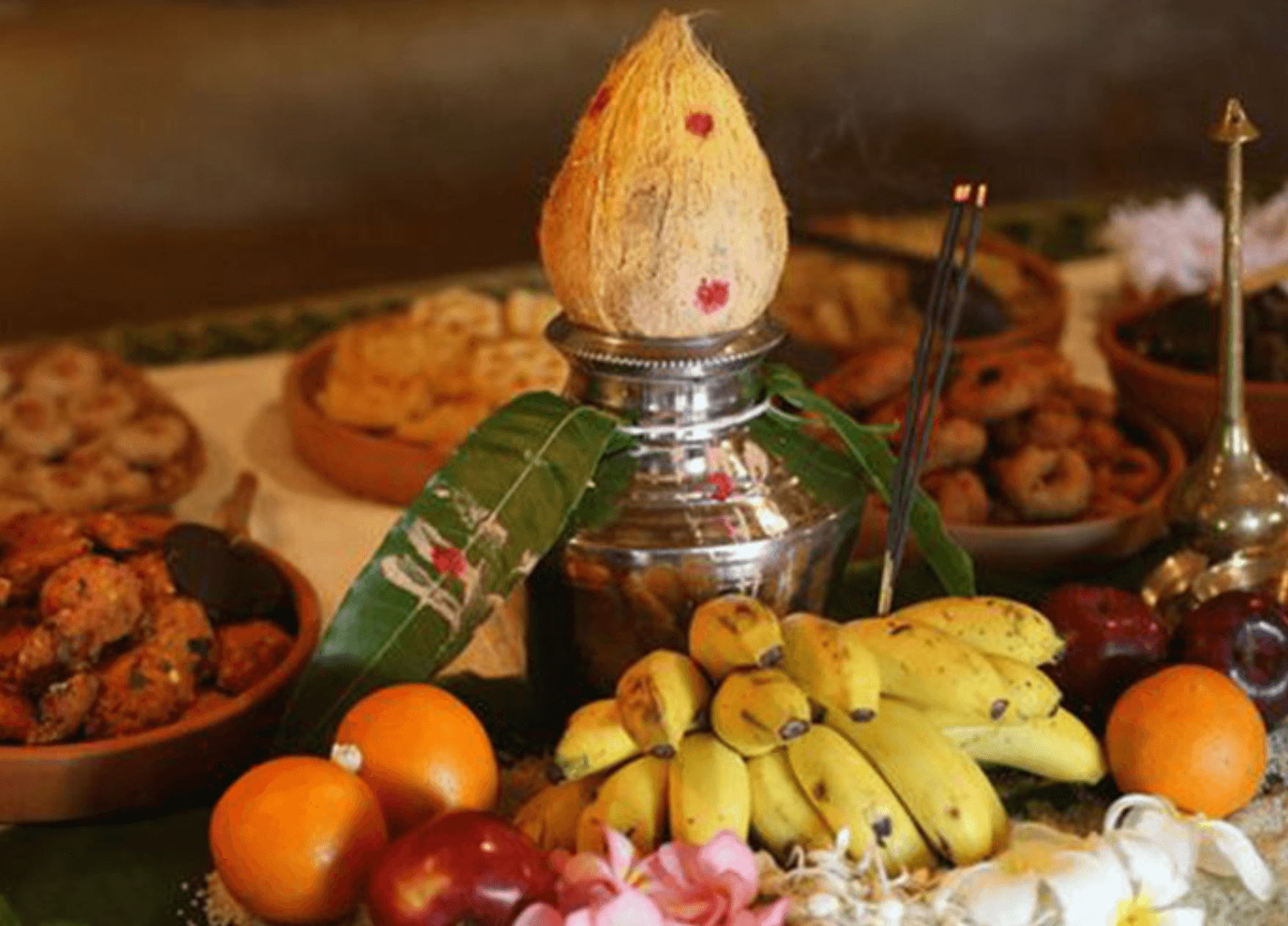
The Tamil New Year begins not with fireworks but with a tray of mangoes, bananas, jackfruit, flowers, and a mirror: the first thing you are supposed to see on the morning of April 14 is this auspicious arrangement, which is believed to bring wealth and prosperity for the year ahead.
Puthandu is fixed to the Tamil solar calendar: it marks the sun's entry into Mesha (Aries), the first sign of the Tamil zodiac. Because this is a solar event, the Gregorian date remains stable at April 13 or 14. It is not determined by the lunar calendar.
The solar new year
Puthandu, also called Varushapirappu, marks the beginning of the Tamil year at the moment the sun enters Mesha (Aries), the first sign of the Tamil solar zodiac. This happens on April 13 or April 14 in the Gregorian calendar. The same solar event is celebrated as Baisakhi in Punjab and as Vishu in Kerala, each with distinct local customs. Because Puthandu is anchored to the sun's position in the sky, its Gregorian date is as stable as any Western calendar date. This distinguishes it from Hindu festivals like Diwali or Ganesha Chaturthi, which follow the lunisolar calendar and shift by weeks from year to year.
The auspicious tray
The central ritual of Puthandu morning is Kani Paarthal: the first thing you see upon waking must be a specially arranged tray. Families lay out three fruits (mango, banana, jackfruit), silver or gold jewellery, betel leaves and areca nut, fresh flowers, and a mirror. Looking at this tray as the first act of the year is believed to bring wealth, health, and prosperity in the months ahead. In Pondicherry, this private domestic ritual plays out in homes across the Tamil quarter and among Tamil families throughout the city.
Mangai Pachadi
The family feast in the evening is the social centrepiece of Puthandu. The essential dish is Mangai Pachadi: raw mango cooked with jaggery, neem flowers, and tamarind. It is deliberately complex in flavour, combining sour, sweet, bitter, and salty in one mouthful. Tamil tradition holds that this mixture encodes the whole range of experience the new year will bring.
Further reading
The Wikipedia article on Puthandu (en.wikipedia.org/wiki/Puthandu) is a thorough introduction to the festival's customs across Tamil Nadu and its diaspora.
The Pondy App
Take this guide with you
Offline maps, street-level history, restaurant picks, and hotel guides — everything on this site, in your pocket.