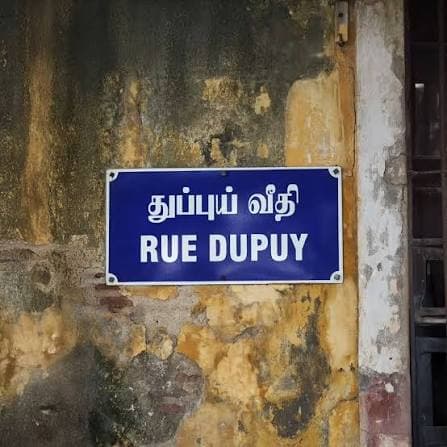
East–West Street
Rue Dupuy
Named after: André Julien, Comte Dupuy, Governor-General of Pondicherry 1816-1825 (1816–1825)
Welcome to Rue Dupuy, named after the Governor who gave French Pondicherry a second beginning. André Julien, Comte Dupuy arrived in 1816 to restore French sovereignty after a generation of British occupation. He found a ruined city and a deprived population. He started clearing the rubble and laying out the boulevards that still define the outer town today.
André Julien, Comte Dupuy governed Pondicherry from 1816 to 1825, arriving on behalf of Louis XVIII to make the Treaty of Paris of 1814 real: to raise the French flag, re-establish French law, and begin rebuilding a city that had been destroyed, returned, destroyed again, and left to decay.
What he found was grim. The British had systematically demolished Pondicherry's fortifications in 1793, leaving rubble where the old city walls had stood. The population was poor and deprived. Dupuy saw in those ruins an opportunity. He began clearing them and laying out the boulevards that now form the outer ring of the modern town, transforming the demolition line of the old fortifications into new streets. The urban form of outer Pondicherry today comes from that decision.
His legal contribution was equally lasting. Dupuy applied uniform legal codes across all the French Indian settlements, replacing the patchwork of customs and precedents that had accumulated over two centuries. The legal distinctiveness that would make Pondicherry different from the surrounding territory, and attractive to renonçants and French citizens alike, was codified under his administration.
Historians remember him as generous but weak: a good man in a hard situation, rebuilding a city with limited resources and limited support from Paris. He left in 1825 with the boulevards begun, the law codified, and the French flag over a city that was, at least, recognisably French again.
Notable on this street
- Dupuy arrived in 1816 to restore French sovereignty after a generation of British occupation. The Treaty of Paris 1814 had returned France's Indian settlements; his job was to make it real.
- He found Pondicherry poor, deprived, and half-ruined. The British had demolished the fortifications in 1793, leaving rubble where the old walls had stood.
- The boulevards of modern Pondicherry were his idea: he cleared the ruins of the fortifications and laid out new streets on the demolition line. The outer ring of the town came from that decision.
- He applied uniform legal codes across all French Indian settlements, replacing two centuries of accumulated custom. The legal character that still makes Pondicherry distinctive was codified under his administration.
- Historians called him generous but weak: a good man trying to rebuild a ruined city with insufficient resources and limited support from Paris.
The Pondy App
Take this guide with you
Offline maps, street-level history, restaurant picks, and hotel guides — everything on this site, in your pocket.