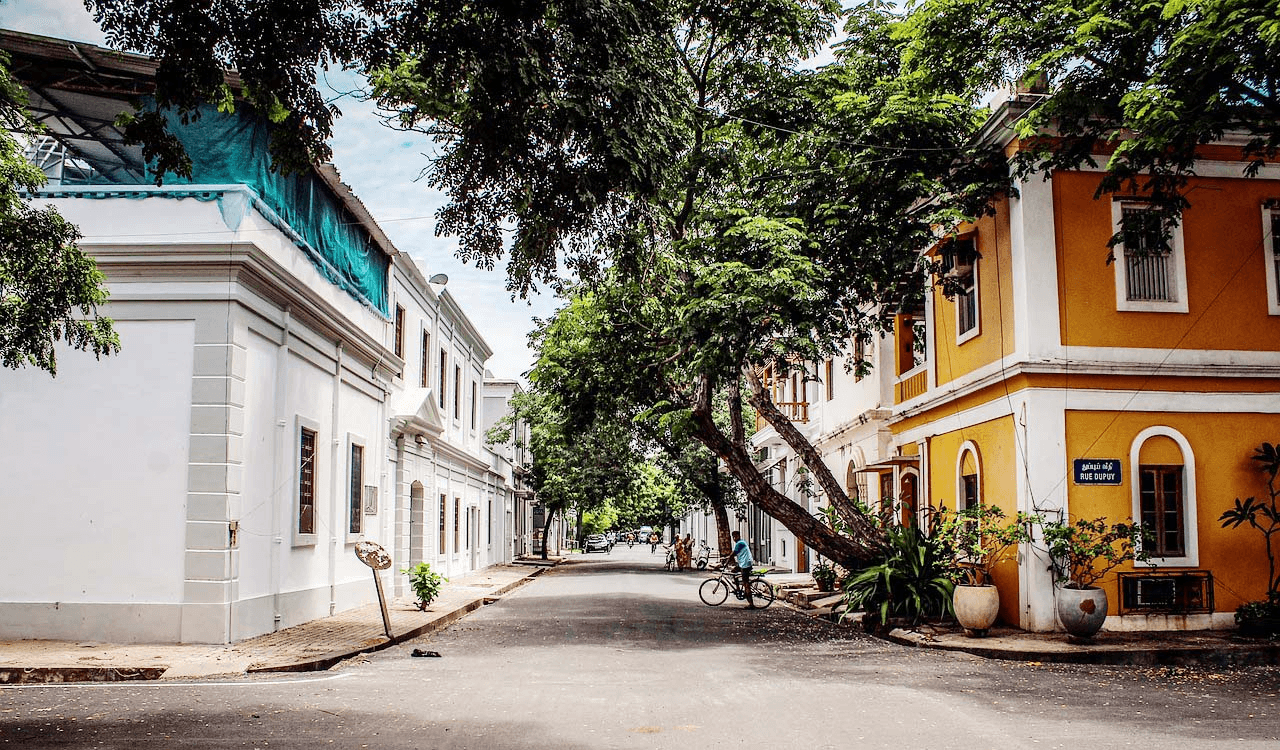
North–South Street
Nainiappa Pillai Street
Also known as: Rue Nainiappa Pillai
Named after: Nainiappa Pillai (died 1716), chief broker of the French East India Company in Pondicherry, whose story led directly to his nephew Ananda Ranga Pillai
Welcome to Nainiappa Pillai Street, named after the first great Tamil broker of French Pondicherry, the dubash who made the colony commercially viable in the early eighteenth century, was arrested by the governor he served, died in prison in 1716, and whose son traveled to France to demand justice from the Regent of the Duke of Orléans — and got it. His story is the beginning of the Pillai family's extraordinary involvement in French India.
Nainiappa Pillai was appointed chief broker and courtier for the French East India Company in Pondicherry in 1708, following the death of his predecessor. His role was the same as the later dubash: commercial intermediary, credit broker, intelligence gatherer, and essential human interface between the European administration and the Tamil trading world. Under his leadership he convinced wealthy Tamil merchants to relocate their businesses from Madras to Pondicherry, growing the colony's trade significantly. He was the most powerful Indian figure in the settlement.
In 1716, he fell out with Governor Guillaume-André de Hébert. He was accused of embezzlement, arrested on 19 February 1716, and died shortly afterwards in prison, whether from harsh treatment, illness, or neglect, the record does not clearly say. His death was the result of the same structural vulnerability that made the dubash position dangerous: indispensable to the French administration in commerce, but entirely subject to it in law.
What followed was remarkable. Nainiappa's son Guruvappa Pillai, fearing the governor's further wrath, fled to Madras, then traveled to France by way of England to plead his father's case directly to Philippe II, Duke of Orléans, the Regent of France. He was received. The Duke ordered Governor Hébert to be removed from office and sent back to France under arrest. Guruvappa converted to Catholicism, with the Duke as his godfather, was admitted to the Order of Saint Michael as a chevalier, and was named Head of the French Indians at Pondicherry. A Tamil merchant's son had traveled to France and unseated a French governor.
His nephew was Ananda Ranga Pillai, who would become Dupleix's dubash and keep the diary that is the most important Indian account of French India. The street that bears Nainiappa's name sits beside the street that bears his nephew's.
Notable on this street
- He died in prison in 1716, arrested by the governor he had served. His son then traveled from Pondicherry to France to plead his case to the Regent of France. The Regent believed him and unseated the governor.
- Guruvappa Pillai's journey: Pondicherry to Madras to England to France. He was received by the Duke of Orléans, converted to Catholicism with the Duke as godfather, and returned to Pondicherry as Head of the French Indians.
- The removal of Governor Hébert at the demand of a Tamil merchant's son is one of the most extraordinary episodes in the history of French India.
- His nephew was Ananda Ranga Pillai, the dubash and diarist. The Pillai family's engagement with French power began with Nainiappa's rise and his son's quest for justice, and continued through Ananda Ranga's twenty-five years at Dupleix's side.
The Pondy App
Take this guide with you
Offline maps, street-level history, restaurant picks, and hotel guides — everything on this site, in your pocket.