Full day
Gingee Fort
Seventy kilometres west of Pondicherry, one of the most formidable fortresses in South India: three granite hills connected by walls and bastions, called the Troy of the East by the British.
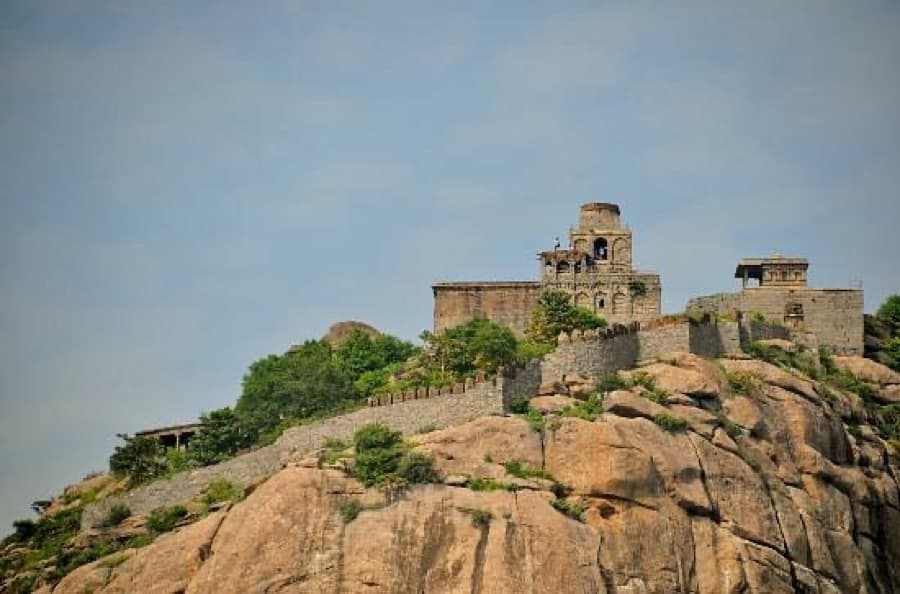
Gingee (pronounced Senji) is one of the most impressive fortresses in South India and one of the least visited given its scale. Located 70 kilometres west of Pondicherry — about 1.5 hours by road — the fort complex covers three separate granite hills connected by massive walls, bastions, and moats spanning approximately 11 square kilometres.
History
Built by the Nayaks of Gingee in the 15th century on foundations that may be older, the fort passed through successive hands without ever falling easily. Shivaji captured it in 1677 and found it so impressive that he called it the most impregnable fortress in India. The Mughals besieged it for eight years and finally took it in 1698 only through negotiation rather than force. The French held it briefly in the 18th century, followed by the British, who named it the Troy of the East — a phrase that has stayed with it since.
What to see
Rajagiri is the tallest of the three hills at 160 metres, with the most substantial ruins on the summit: a granary, a palace, a temple, a chakra (drilling stone), an elephant tank, and an audience hall perched at the edge of the cliff. The climb takes 45 to 60 minutes on steep rock steps and is demanding in the heat of the day.
Krishnagiri hill is lower and contains the main gateway complex, the 1,000-pillared audience hall, a tank, and a small museum at its base. The inner enclosure of the fort on this hill is the most photogenic section.
Chandrayandurg connects the two main hills and contains water cisterns and defensive walls.
Getting there
Self-driven scooter or car is the most practical option: the road from Pondicherry via Tindivanam is straightforward. Buses run from the Pondicherry main bus stand to Gingee (change at Villupuram or Tindivanam). Journey time by bus is around two hours.
Timings and entry
Archaeological Survey of India site: open daily, 9am to 5:30pm. Entry fee approximately 40 rupees for Indian nationals, 600 rupees for foreign visitors. Allow a full day if you intend to climb Rajagiri.
The Pondy App
Take this guide with you
Offline maps, street-level history, restaurant picks, and hotel guides — everything on this site, in your pocket.